
The Pao Student Seminar is a high school student-led forum for educational sharing and exchange. Covering a wide range of topics, it lets curiosity and interest extend far beyond class textbooks. No subject is too niche for it. Since its founding, it has held seven sessions, with more than fourteen students taking the stage to present their ideas.
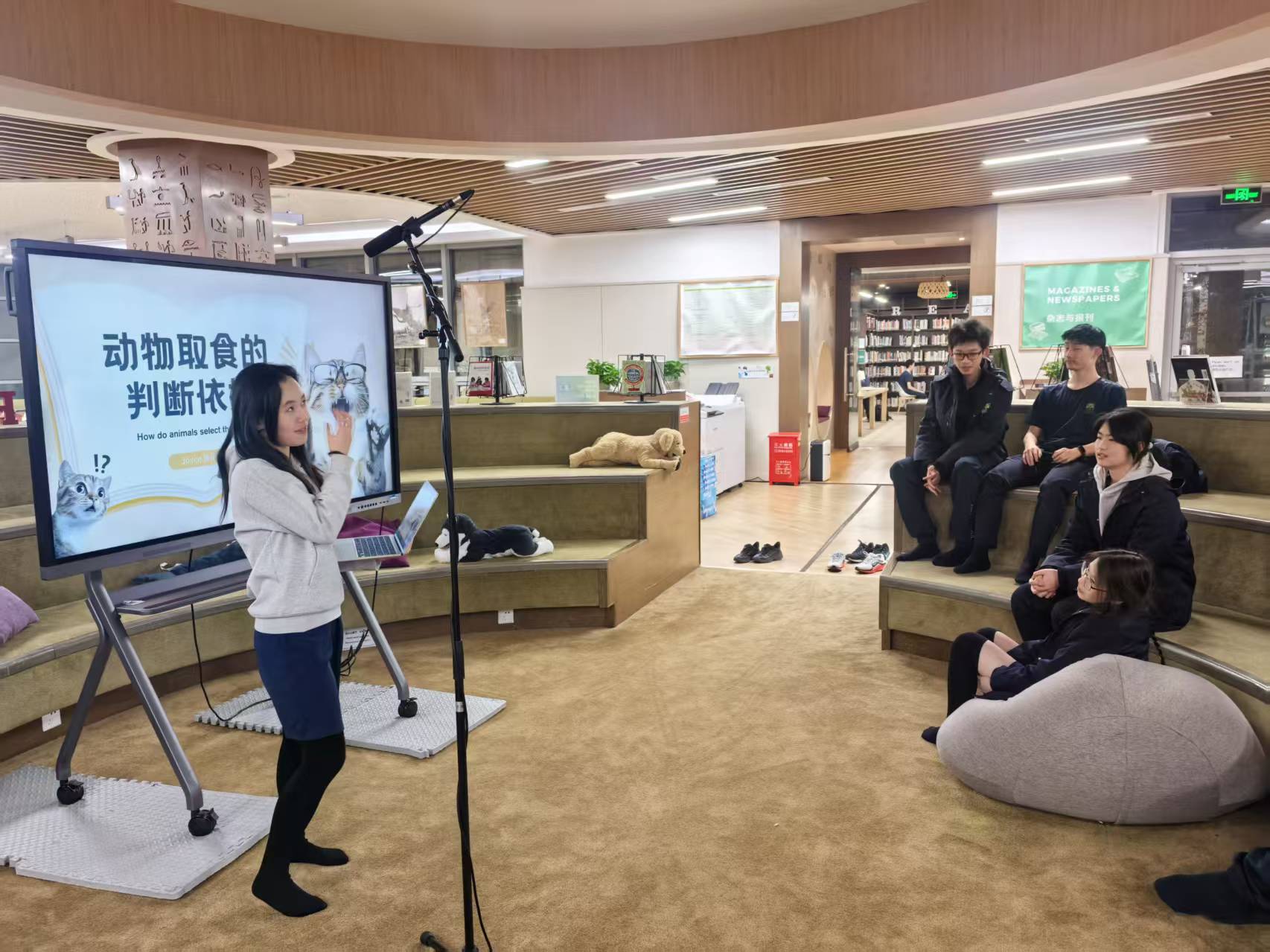
Deputy Principal Zang Na explained that the school created this forum to encourage students to explore and share their passions, while making it possible for even the most marginal thought to be brought under friendly examination. Topics have run the gamut from cutting-edge science—food systems, hydrogel materials, and quantum computing applications—and interdisciplinary experiments such as applying physics to music production, to humanities and social-science reflections including ancient Chinese perspectives on death and the spirit of rebellion in poetry, and practical concerns including drug-prevention education.
The Evolutionary Code of Human Facial Expression
Eli He, from Year 11, began his presentation with a provocative physiological question: why do dinosaurs show no facial expression while humans have more than 30 complex facial muscles? From there he advanced into further questions, asking whether expressions like smiling are spontaneous reflections of inner feeling or vestigial defensive reflexes repurposed by evolution.
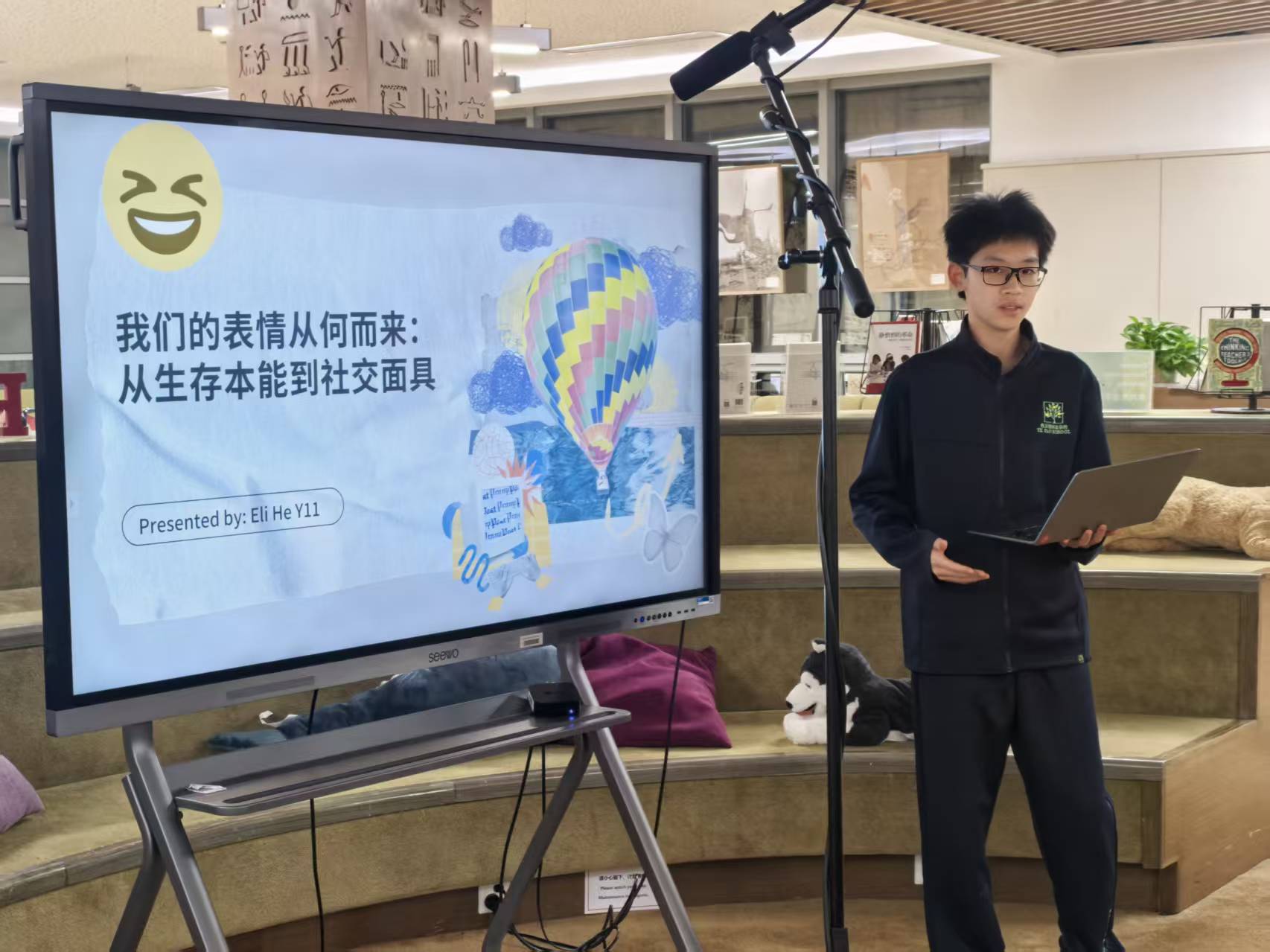
He examined the idea of 'exaptation' which suggests how muscles originally used for chewing or head stabilisation could be co-opted for finer facial movements, and then discussed the way primate defensive behaviours had been ritualised into social signals. He contrasted the limbic 'instinctive' pathway with the prefrontal 'rational' pathway for neural transmission. By bringing IB Biology concepts to life in this way, he had deepened his understanding of evolution and neuroscience, while encouraging his peers to reexamine everyday expressions through psychological and epistemological critical thinking.
The Boundaries of Law and the Bottom Line for Studying Abroad
Joshua Zheng, from Year 10, delivered a presentation called 'Guardian Journey: Global Drug Policies Comparison.' As a Changning District Anti-Drug Ambassador, he had been motivated by a real-world blind spot: many Chinese students preparing to study overseas don't realize that substances that may seem legal abroad can still be prohibited under local rules for international students and under Chinese law. His goal was to equip classmates with the knowledge they need to avoid legal, health, and academic risks.
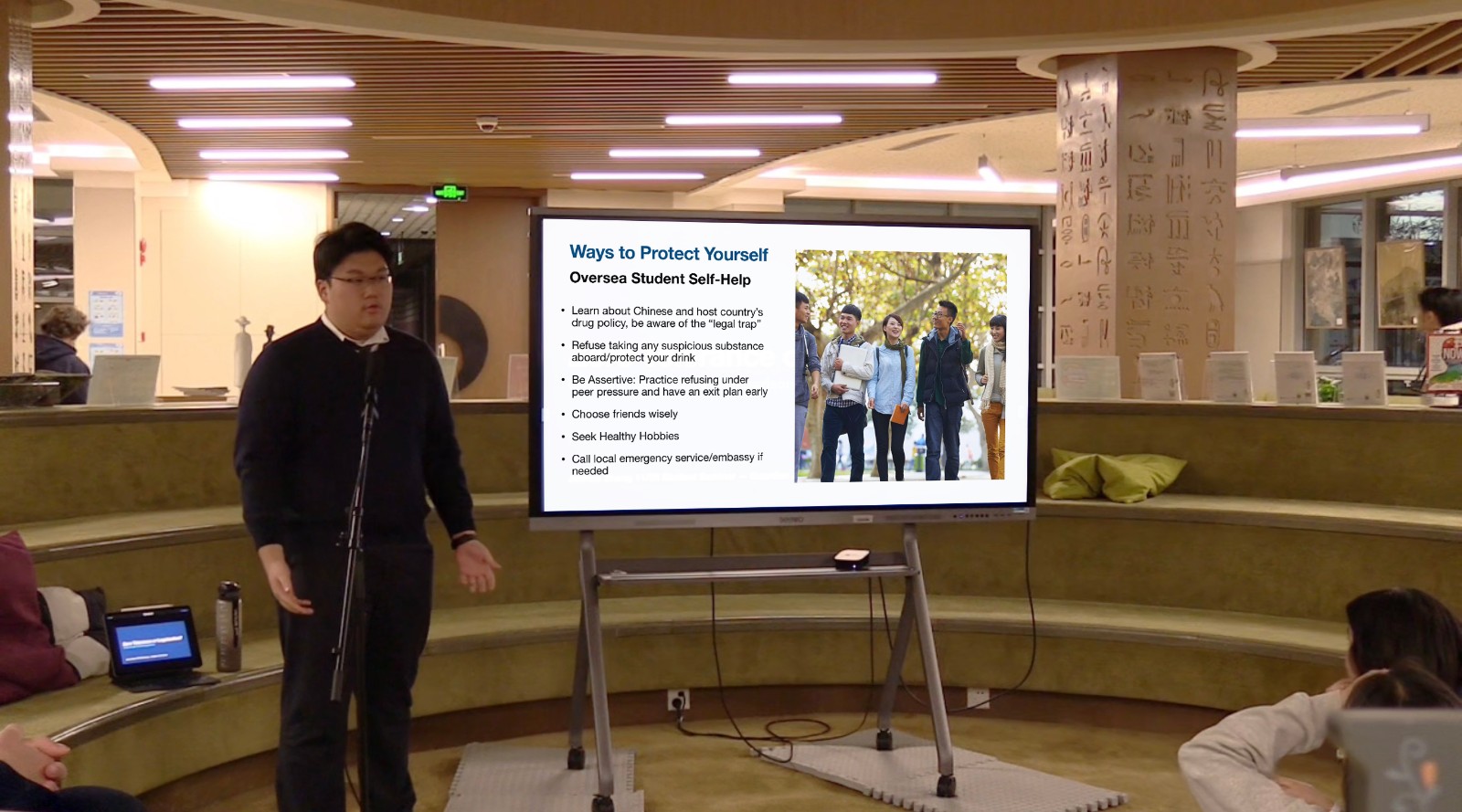
Joshua's project drew on skills accumulated across his schooling: primary school Exploratory Unit class taught him to read international legal documents critically; middle-school IT classes helped him visualize complex data; and high-school language and literature work had sharpened his presentation skills. He synthesized these abilities to analyze UN conventions and national drug policies; track legal updates up to 2025; collect case studies involving international students; investigate common drug disguises (such as edibles and e-cigarettes); and then consult both Chinese embassies/consulates and international organizations for official guidance.
Shifts in Views of Life and Death and the Rise and Fall of Civilizations
Leo Wang, from Year 9, is passionate about cultural heritage. He tackled the bold topic of ancient Chinese attitudes toward death, from funeral rites to philosophical reflections and religious beliefs. Using archaeological methods that involve reading tombs and artifacts as historical evidence, he examined ritual objects and epitaphs to trace how concepts of death had changed across dynasties. By using a chronological framework to show how material changes had influenced spiritual outlooks, he confronted a subject which is often avoided in contemporary Chinese culture.
Wang connected his research to classroom learning in history and philosophy, showing how the Hundred Schools of Thought; political shifts; productivity changes; and talent selection systems had shaped ancient people's inner worlds. He then charted evolving views of death, from ideas about honor and sacrifice, to pursuits of alchemical immortality, to an appreciation of inner moral light that outlives written records, in order to argue that a civilization's view of death can influence its vitality and decline.
At the Pao Student Seminar, young people speak openly, explore the fields they love, and let ideas take root and grow through peer exchange. This ability to flourish intellectually through free dialogue is a vivid expression of the whole-person education YK Pao advocates.