

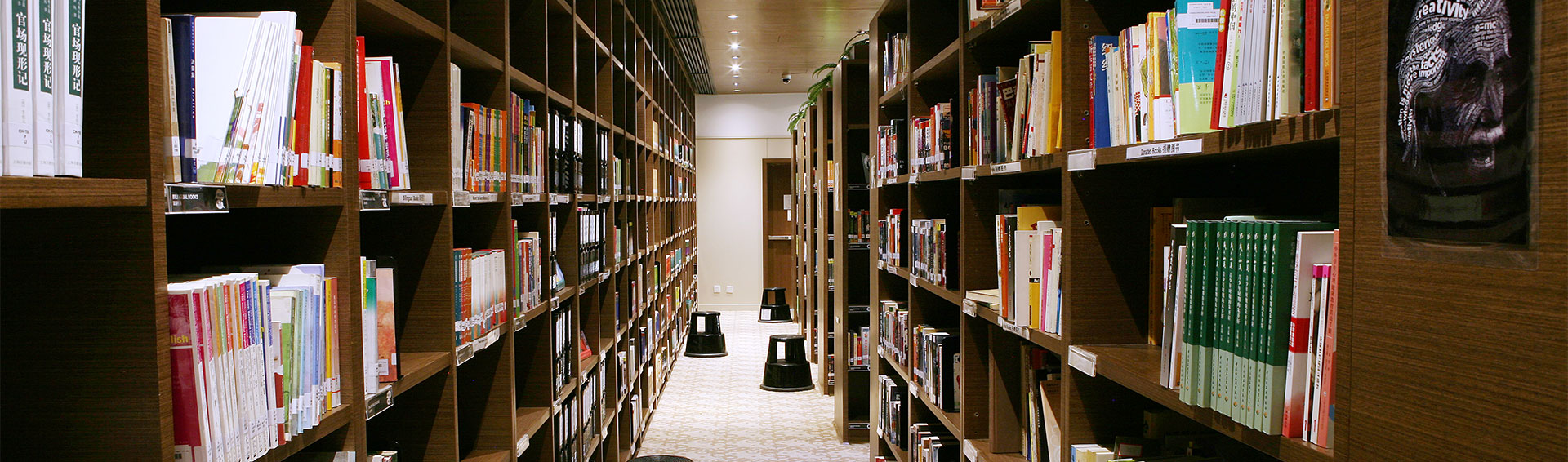
The High School English Department at Pao School recently concluded its 'My Tiny Memoir' writing contest, which asks participants to "tell an interesting true story from their life in just 100 words." Inspired by the story-telling form of international newspaper columns, the contest invites students to both advance their self-discovery through writing and cultivate their empathy for others through reading.
Ms May Xiong, the teacher who co-organized the competition, noted several enhancements to this year's program. Instead of prescribing a specific theme or genre, the focus was on crafting a compelling narrative —clearly presenting the rising action and falling action in a narrative arc within the compact 100-word space. Entries were expected to use vivid detail and a unique perspective to tell an authentic, moving story. In terms of format, this year marked the competition's integration into the school's House competition system featuring rich experiences and diverse events for the first time. The introduction of anonymous submissions was also designed to encourage candid and creative expression.
The judging panels conducted multiple rounds of evaluation using five criteria: storytelling; language; personal voice; narrative structure; and adherence to formatting. After fierce competition in the preliminary and interhouse final rounds, a number of outstanding pieces of writing stood out. These “Tiny Memoirs” reflect the students' proficient narrative skills and artful command of the English language featuring creativity and originality. In the end, the Autumn House emerged as the champion, with its members’ excellent performance topping the houses' overall rankings.
Student Memoirs Swipe up to view Between Breaths by Tony Gong "Breathing's simple," my coach said. "In and out." But underwater, the words twisted. My chest tightened, my throat locked. I tried to breathe out, but it was all too late. Water rushed in, sharp and cold. The pool turned into noise and blur, arms thrashing, bubbles exploding around me. Someone shouted, "In and out." I thrust myself upward, reaching the surface. Air crashed back to my lungs, like fire. I gasped and coughed, trembling on the edge of the pool. My coach knelt beside me, still calm. "In and out", he said again, as if it had always been easy. Teacher's comments The repeated line "inhale, exhale" first functions as a somewhat cliche instruction from the coach, then as a sideline shout during the protagonist's drowning, and finally as the coach's calm repetition for emphasis: the shifting contexts create a stark contrast that underlines the idea that one does not truly understand something until one has experienced it through lived experience. The auditory detail, visual imageries, and movements evoke chaos and suffocation. The phrase "thrust myself upward" conveys a burst of survival instrinct, but it were to be softened to depict a desperate yet flailing struggle it would have better reflected a drowning person's authentic experience. This diction is a room for improvement worthy of considering.
Swipe up to view "When the Past is Left Behind" by Agnes Liu Y10 From the hotel's 16th floor, Macau burst into a theatre of magic and fireworks. A searing gold thread blazed then unfurled, blossoming into glimmers of ethereal sand; celestial blue stars shimmered then relinquished, showering down from heaven like an angel's effervescent tears. And I understood. Our most transformative moments demand too this terrifying yet sublime release: to shatter our past selves, trusting the resulting bloom would be far more magnificent than the shell we leave behind. Behind me, past shackles shriveled into the night; before me, endless new possibilities swirled into existence, in perfect symphony with the dancing light. Teacher's comments: The wordplay is brilliant. The word “shell” can be understood in three ways. First, it suggests an explosive device as a whole. Second, it could mean the small metal container that held the firework fuel which is now broken. Third, it may refer to the body or shell of a person or other living creatures. In the second paragraph the piece moves from fireworks outside the window to a moment of life that shows change. These three meanings fit together and help to move the idea forwards. The two spaces before and behind “me,” the contrast of light and shadow, “my” past self turned into illuminating fragments, and “my” future self full of possibility…. These ideas all come alive via the words, thanks to the arts of language.
Swipe up to view "Hiraizumi's Everlasting Wail" by Henry Liu 78 moons ago, Alex and I— at tournament, friendship started. I've feared our randori since… would rip our shared bond. 78 suns ago, he wore white; I wore blue. My coach pulled me aside: "Friendship," he recited, eyeing him, "comes after winning. Seize osaekomi—don't let it slip." The line echoed: whispers, in corners, sick legacy passing. Cheers blared, like I knew what to do. I didn't. I stumbled. And edged ahead. Contorted ambition shoved my Ritsurei. "Kaishin." Alex and I both looked away—he'd heard the same. When did we forget: "Friendship first, competition second?" Or the other way around? Teacher's comments Which is it, friendship first and the competition second, or the other way around? The ending of this story is intentionally left open-ended. The reader is not told which of the two boys has won, so each reader can imagine the aftermath a bit differently. Or maybe the result is not important after all; what matters is how both boys feel and change as they struggle and must push themselves hard for the team’s honor. Using the moon and the sun to represent months and days is creative, contributing to a vivid sense of time passing.
"Softly" by Momo Xu Y11 I walk under streetlight where rain is temporarily visible, almost fluorescent. It's the last night of two weeks of summer school. Something in the lawn flickers both sides to me, like signal lights on wings of ocean-crossing planes. I realize they are something I have never seen in the entirety of my almost-sixteen years of existence; they are fireflies. Rain falls onto tips of grass, and droplets glimmer as if they might be fireflies as well. It feels like a revelation, an omen. A farewell. So I stand there long, and let the wind carry away, softly, my own goodbye. “A Tiny Fraction ” There's me, sitting on the cold stone stair ways in the shades, daydreaming, the aromatic and thick smell of the old yogurt drifting towards me through the alley in Tengchong. Then, there are friends, hands to hands, back to the wet grasslands, small raindrops filling the air. All framed in the one single moment, deposited in a piece of photograph. Then, when I take it out again, that was all I could recall, a tiny fraction of a second, a tiny fraction of our trip, a tiny fraction of the youth.
"Of Roads and Reticence" 2021: Grandmother, returning from chemo, kneeling in front where my grandfather once slept. "Cancer, too." 2024: Summer, wanting to write to him, realizing I didn't remember his name. I wept, apologized, wept. 2024: Fall,cancer-free grandmother in Shanghai. Rain teetered. Old couple passed, oneumbrella. I diverted my gazetowards streetlamps, strewn boba bottles, windows oozing belonging. I didn’tdare look at the survivor beside me, having as much grit as painful memories. Istared down at my crease-less hands instead. 2025: He visited in my dreams. First in four years. We were racing through green stalks. He seemed happy.
Staff Memoirs