
Pao School's middle school Chinese and Humanities departments have launched a research and practice initiative called 'Strategies for Developing Intercultural Competence.' Teachers work across disciplines to design and deliver project‑based learning that cultivates the ideal of 'global citizens with a Chinese heart,' helping students to communicate and collaborate across cultures while strengthening their own cultural confidence.
The Year 8 History and Chinese departments designed an interdisciplinary project-based learning programme (PBL) together, over six weeks during the second term (December 2025 to January 2026). This has been named the 'National Treasures Recovery Project.'
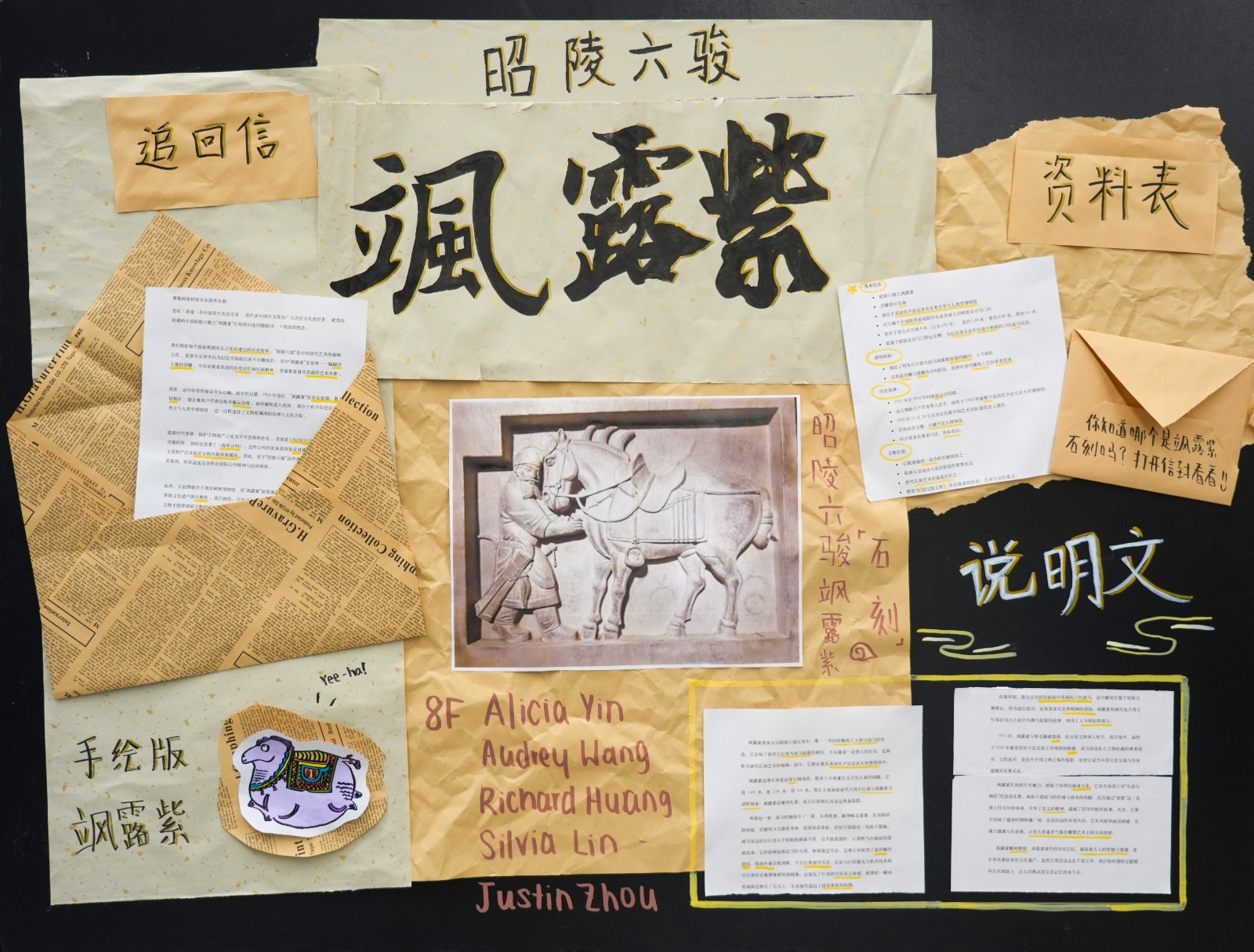
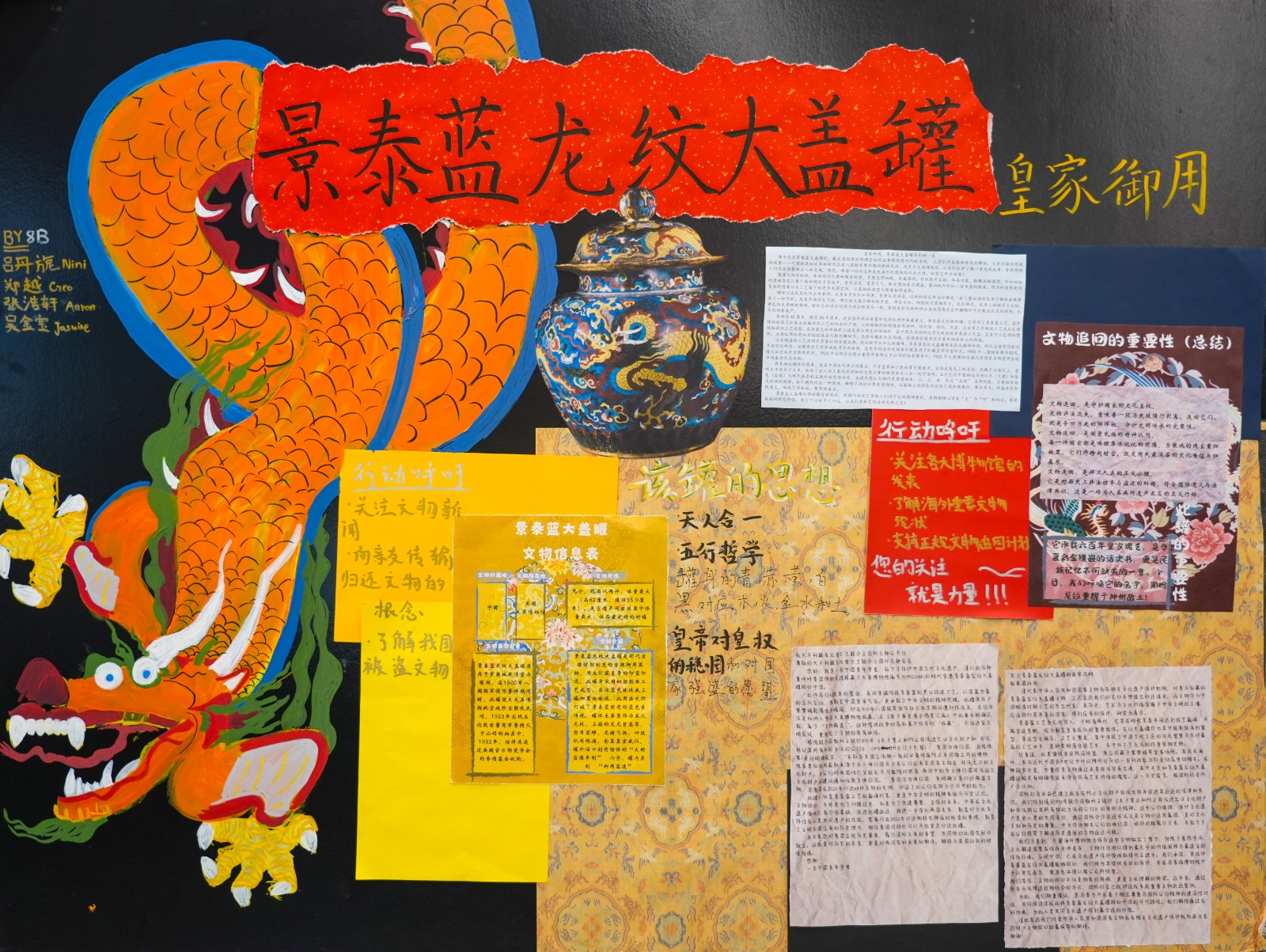
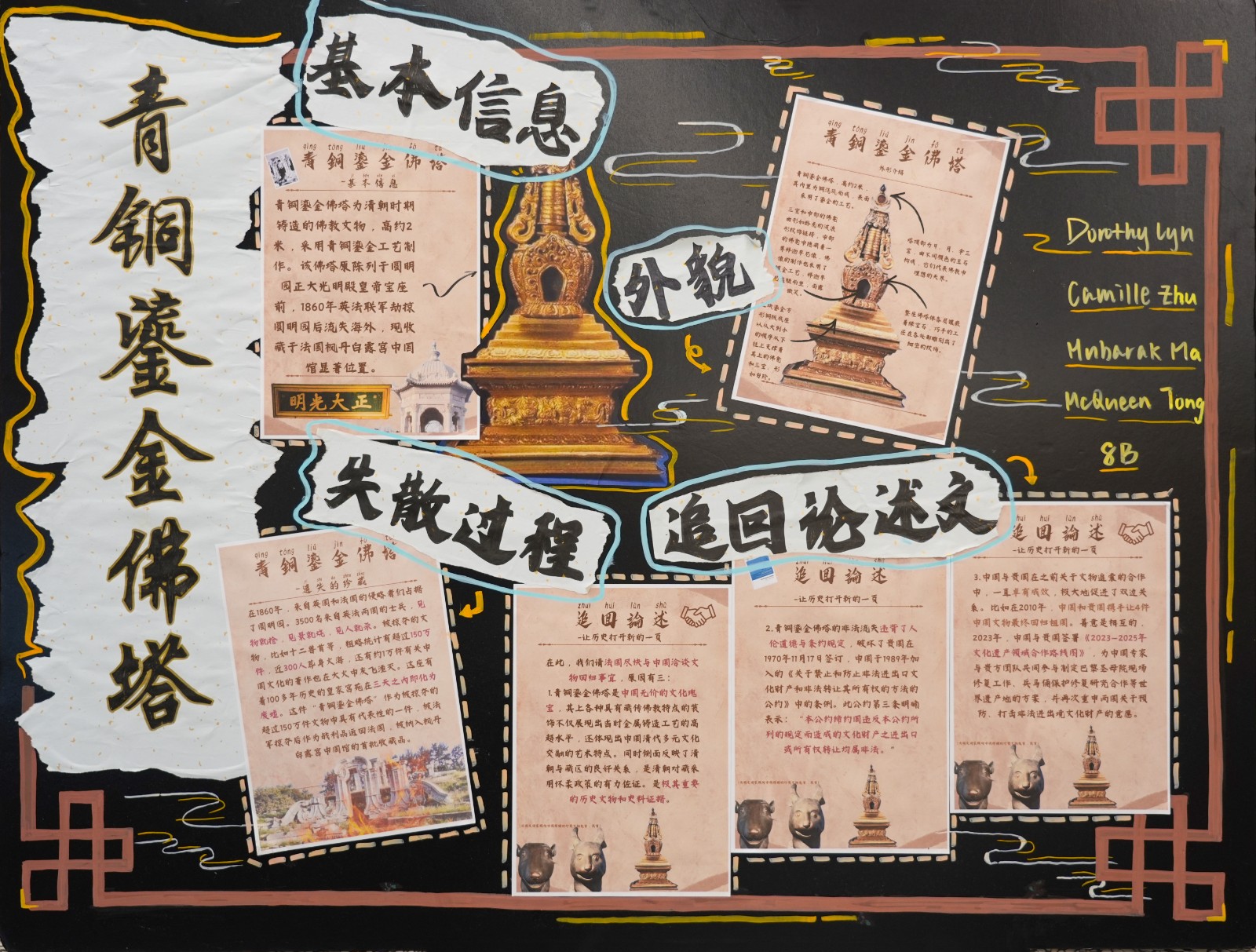
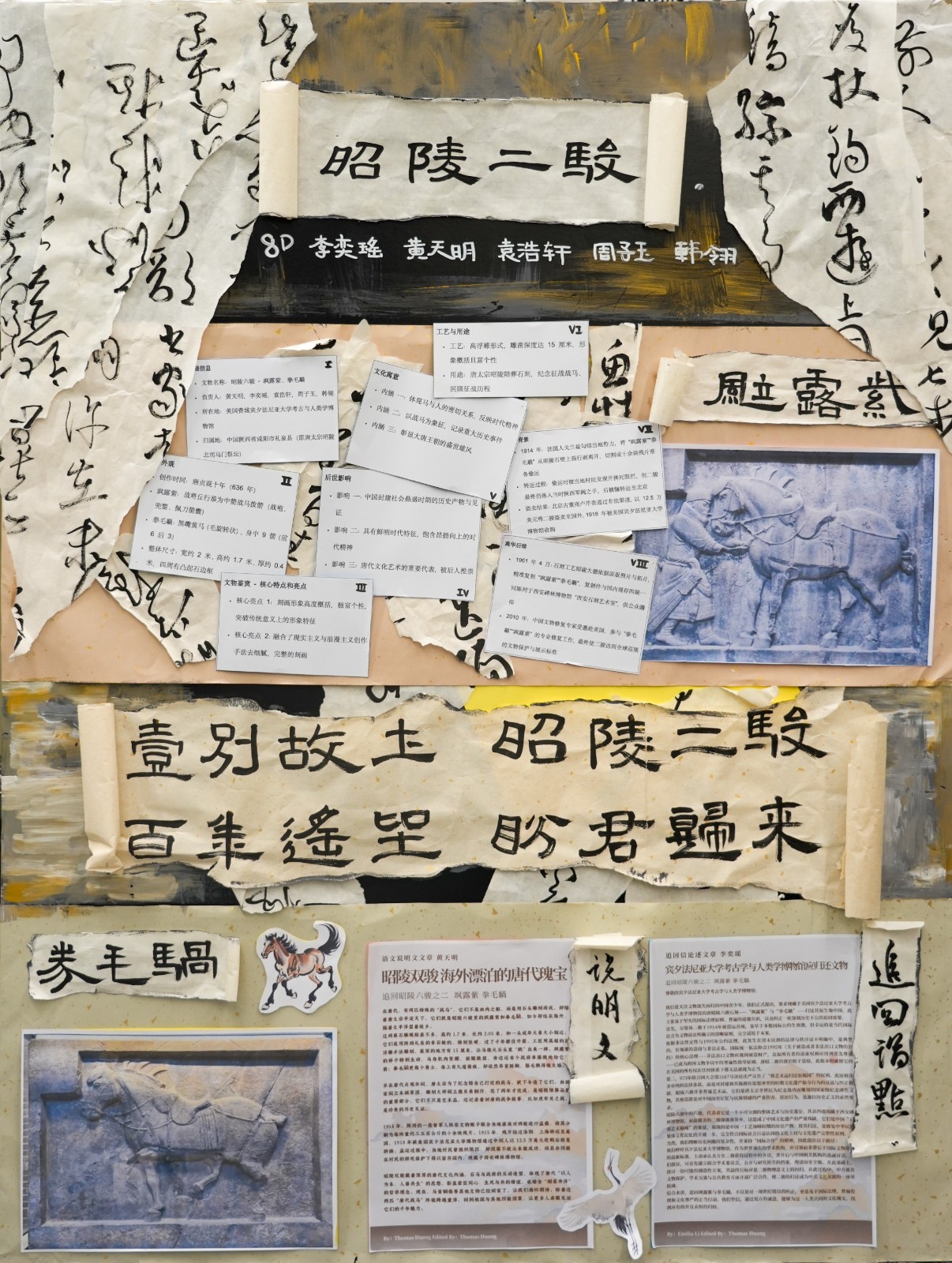
Set in the context of modern Chinese history and the overseas displacement of cultural artefacts, the project guided students through a detailed enquiry into a nationally significant artefact that had been taken abroad. The History department led the archival research, oversaw the drafting of public repatriation letters, and managed the production of publicity panels. This work emphasises source evaluation, historical interpretation and the application of relevant international conventions. The Chinese department concentrated on precise expository writing at three levels: the object's form and manufacture, its historical context and its cultural significance. Each group then combined their work into a public awareness exhibition panel for the National Treasure Recovery campaign, which is displayed in the school's learning area.
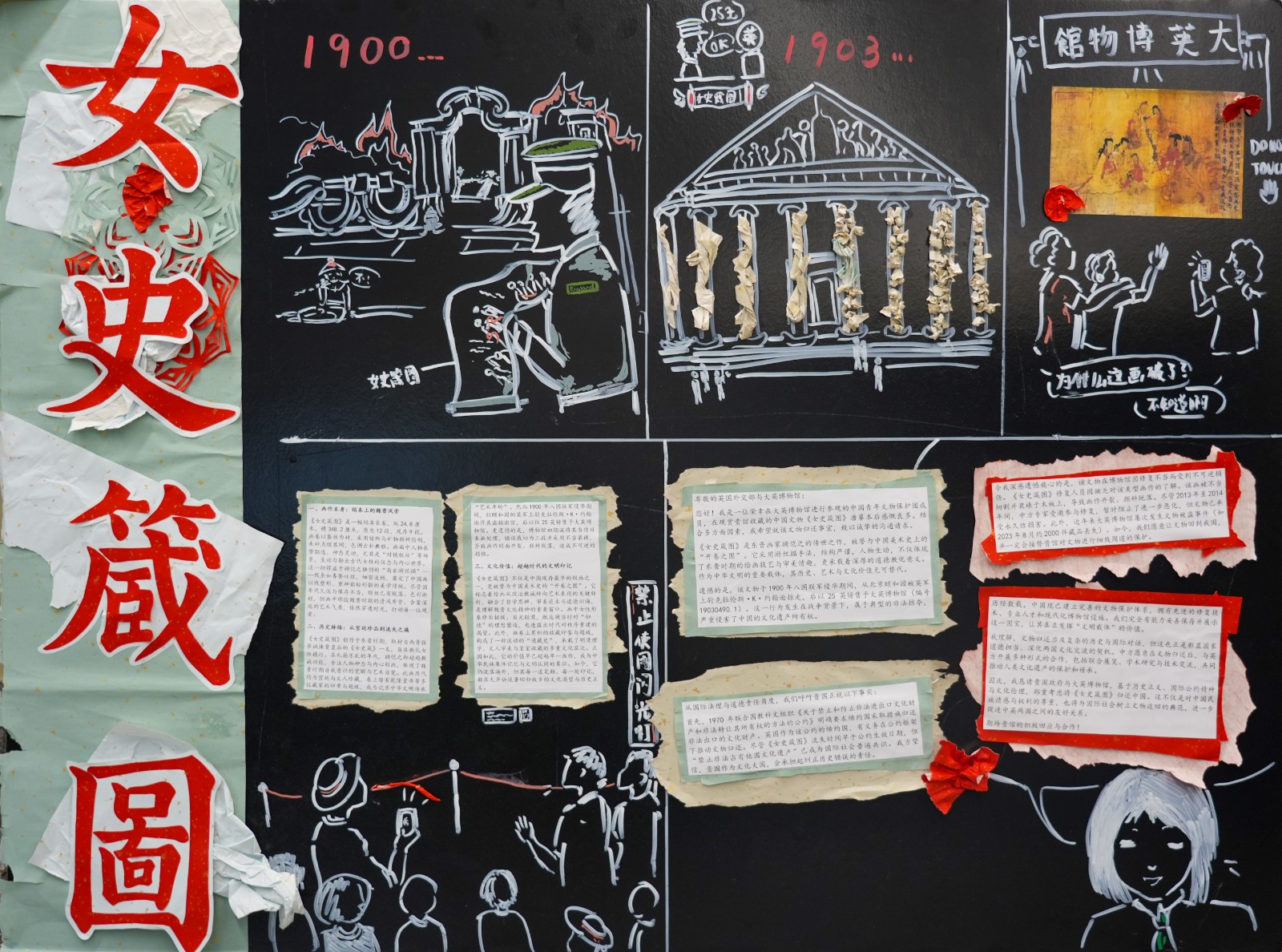
In this interdisciplinary project, each group combined historical argumentation with Chinese language expression, breaking down subject silos. Students completed the full learning cycle in a real-world context, from source verification to public presentation. The project equipped students to present, interpret and promote Chinese culture proactively in cross cultural settings.
Student's Reflections
Thomas Huang:
"Thanks to the teachers' careful guidance and planning, this project naturally blended the explanatory writing techniques we practised in our Chinese lessons with the factual content and source analysis skills from our History classes. Making the publicity panels sparked my creativity and was great fun. The 'National Treasure' project improved both our History and Chinese skills and gave us a deeper understanding of the loss of artefacts overseas in modern history."
Valerie Huang:
"Choosing which artefacts to study gradually revealed an entire historical panorama. The black and white history I had only seen in patriotic videos and museums began to gain colour. While completing the History department's Artefact Research Sheet we practised systematic research, learnt to identify and filter reliable sources, and developed skills in synthesising and summarising information. When drafting the open letter, I consulted international conventions and learnt how to use facts and international law to defend cultural interests. Revising the explanatory pieces sharpened my reasoning and language, and close, detailed observation deepened my connection with the artefacts."
Melissa Chen:
"I found the National Treasures project both deeply meaningful and demanding. Its extended duration gave us ample time to explore the background and historical significance of the lost artefacts, but it also put our group's teamwork and time management to the test. The interdisciplinary tasks in Chinese and History required us to combine many skills, for example gathering precise historical evidence to write explanatory pieces and applying Chinese writing conventions to draft open letters requesting repatriation."
Teacher's Reflections
Sharpay Cao,
Middle School Humanities Teacher :
"Studying history, of course, relies on sources, but what matters more is the imprint the past leaves on the present and the influence it exerts. In the National Treasures Recovery Project I hoped that, as students learned about artefacts lost overseas, they would develop a genuine sense of ownership and responsibility towards their country. I was particularly pleased that collaboration with the Chinese department brought this history to life. When students translated rigorous historical verification into nuanced explanatory writing, and in their open letters set out the facts, made legal arguments and appealed to moral duty, I saw a perfect fusion of the History department's quest for truth and the Chinese department's pursuit of beauty"
*Thanks to the Middle School Humanities and Chinese Language Departments for their contributions to this article.